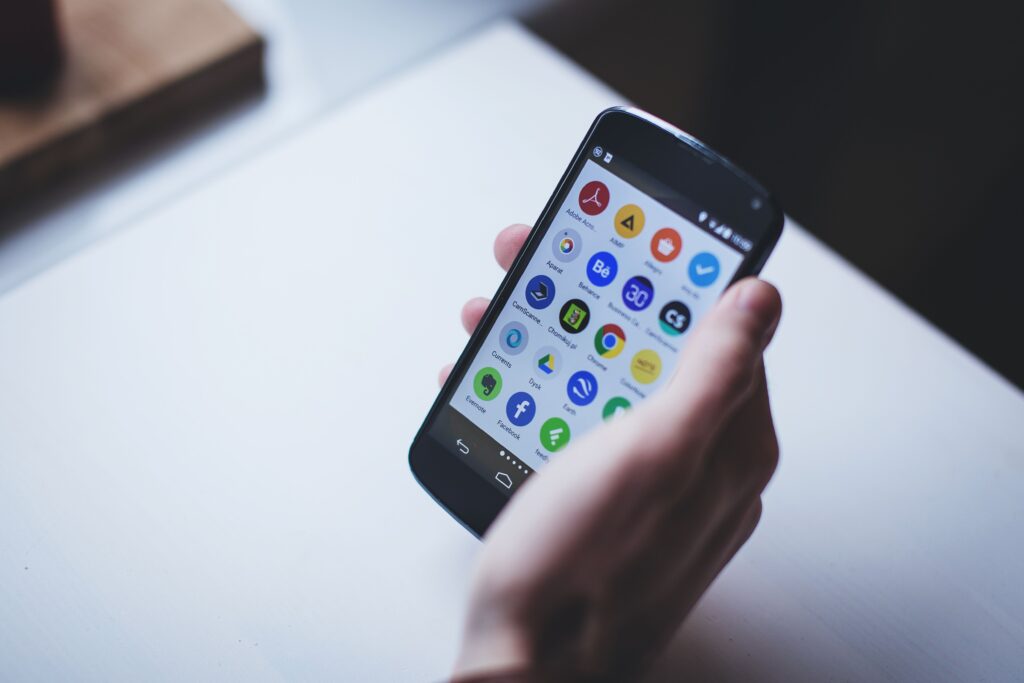
Watching sport with a phone in your hand barely feels unusual anymore. Someone can have the match on television, check another score during a break in play, read a team update and look at the live market without really thinking about the fact that all of those things used to happen in different places. Betting apps slipped into that behaviour quite easily.
It was different when most betting was done on a desktop. You could still follow a match and look at changing odds, of course, but you were generally tied to one screen. The phone removed that little barrier. It made the betting market something you could glance at rather than somewhere you had to go.
That matters more during a live match than it does before one. Pre-match odds can sit there for a while without much happening. A football team that looked comfortable five minutes ago can suddenly be under pressure. A tennis player can lose a service game. Basketball can swing in a couple of possessions. The market reacts to all of that, and having it on the phone made those changes much easier to follow.
For a bettor using betway, the app is usually just one part of what they are following during the game, alongside the match itself, scores, messages and other updates. A person might check the score, answer a message, go back to the match and then decide to download betway because they would rather have the live markets sitting on the phone than keep opening them through a browser. It is a small change in behaviour, but it explains quite a lot about why betting apps became so closely tied to live sport.
The odds stopped feeling static
Before a match starts, odds can look quite fixed. You might compare a few markets, make a decision and leave them alone. Live odds are nothing like that. They can move without the score changing at all. One team may be dominating possession, a player might be struggling, or the clock itself may be changing what is likely to happen next. Anyone watching the game can see the situation developing, and the market is trying to keep up with the same thing.
Phones made it easier to notice those small movements. You do not have to sit watching the numbers. You can look once, return a few minutes later and see that the price has shifted. That is often enough to tell you that the match no longer looks quite the way it did earlier.
Sport itself became more scattered
The way people watch sport has changed alongside the betting apps. A Saturday afternoon can involve one match on television, another score being followed on the phone and several conversations happening at the same time. People jump between them constantly. They check line-ups just before kick-off, look up why somebody has been substituted and read reactions while the game is still going on. Live betting ended up mixed into all of that.
It means the app does not have to keep someone inside it for twenty minutes at a time. In fact, it probably works better when it does the opposite. You want to get in, find what you were looking for and get back to the match.
That changed app design as well. Huge menus might be fine when somebody has time to browse before a game, but they become annoying in the middle of one. The important leagues have to be easy to reach. Search needs to work properly.
The bet slip had to get out of the way
Bet slips are a good example of something that sounds unimportant until it is badly designed. On a big computer screen there is room to leave one sitting at the side while the rest of the markets stay visible. A phone cannot do that very well.
So the bet slip had to become something you could bring up when needed and then push aside again. It also had to remember what was already in there while the user moved around the app.
That sounds obvious now because nearly every decent betting app works in roughly that fashion, but it was one of those changes that made mobile betting noticeably easier. Losing a selection every time you checked another match would get irritating very quickly.
Operators also have to deal with the fact that live selections do not sit still. The odds may change between adding something to the slip and looking at it again, which means the app has to tell the user clearly what happened without turning the whole process into a wall of messages.
Not everybody follows the same sport
Another useful thing about apps is that they can cut down some of the clutter. Someone interested mainly in football probably does not want to scroll through every tennis or basketball event each time they open the app. Another person might care far more about tennis and hardly touch football at all.
Favourites, recent competitions and saved preferences help with that. They are not exactly exciting features, and nobody is going to choose an app because it remembers which league they looked at yesterday. After using it for a while, though, those little things start to matter.
The same is true of notifications. Used properly, they are handy. Used badly, they are just noise. There is a big difference between getting an alert you actually wanted and having your phone light up all afternoon because an app has decided everything is important. Giving people some control over that is more useful than sending more.
The phone never replaced the match
For all the technology involved, the phone is still secondary. People are watching because they care about the match. The live market is interesting because it moves with what they are already seeing, not the other way around.
That is probably why mobile apps fitted into live betting so easily. They did not ask people to develop a completely new habit. The phone was already sitting beside them. Scores were already there. Team news was already there. Messages from friends were already there too.
Live markets simply joined the pile. The bigger change was not that betting became possible on a phone. It was that checking the market became as casual as checking the score.
Desktop betting never disappeared, but for live sport it suddenly felt much less convenient. Once the market could follow the match around in someone’s pocket, there was not much reason for it to stay tied to a desk.
 Bertha Richardonner is the visionary founder of Gamble Wise Roots, a comprehensive platform dedicated to providing news and updates on the gambling industry. With a passion for demystifying the world of casinos, Bertha's expertise shines in simplifying casino basics, offering insights on understanding odds, and exploring the evolution of casino games.
Her deep dive into the origins of betting uncovers the cultural and historical roots of gambling, helping players make more informed decisions. Through Gamble Wise Roots, Bertha empowers enthusiasts with knowledge and a thoughtful approach to gaming.
Bertha Richardonner is the visionary founder of Gamble Wise Roots, a comprehensive platform dedicated to providing news and updates on the gambling industry. With a passion for demystifying the world of casinos, Bertha's expertise shines in simplifying casino basics, offering insights on understanding odds, and exploring the evolution of casino games.
Her deep dive into the origins of betting uncovers the cultural and historical roots of gambling, helping players make more informed decisions. Through Gamble Wise Roots, Bertha empowers enthusiasts with knowledge and a thoughtful approach to gaming.